
South Cambs District Council
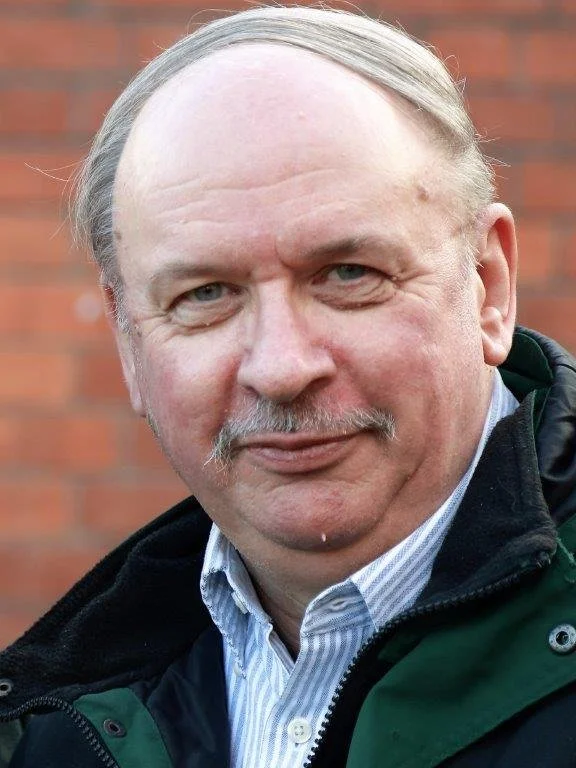
Cllr Peter Sandford
Liberal Democrats
Peter Sandford
Email: cllr.sandford@scambs.gov.uk
Mobile: 07985 425414
Chris Poulton
Email: Chris.Poulton@cambridgeshire.gov.uk
Mobile: 07971 594037
Monthly Report for September 2026
Local Government Reorganisation
The Ministry of Housing, Communities and Local Government (MHCLG) has asking local councils to pause work on the implementation of Local Government Reorganisation (LGR). MHCLG has received advice some of the decisions taken by the previous minister wouldn’t have survived a legal challenge brought by several councils outside Cambridgeshire. After considering the legal advice, MHCLG decided to reflect on the decisions taken and the processes used. The terms of reference for the review have not yet been written.
Elections for new unitary councils will not now take place in 2027 but more likely will happen in 2028. Any elections that had been due in 2027 will take place on exiting council boundaries, for example in Cambridge City. No elections were planned for South Cambridgeshire District Council or Cambridgeshire County Council, so we should have no elections next year.
Details of the way forward are currently lacking, although a White Paper is promised by Christmas. We will keep you informed as things become clearer.
Planning Updates - Significant national changes
There have been major changes to the national planning system (the NPPF or National Planning Policy Framework) which will affect planning decisions in South Cambridgeshire.
The Government has strengthened the presumption in favour of sustainable development,
meaning that development within existing settlements should generally be approved unless its benefits are substantially outweighed by adverse effects. There is also greater support for certain development outside settlements, including agricultural and farm diversification and sport and recreation.
The new rules also place greater emphasis on development close to well-connected railway stations and transport hubs, including locations within the Greater Cambridge area. There is increased support for higher-density development, including development in existing urban areas, extensions and some development within residential gardens.
Other changes include stronger national protection for community facilities such as public houses, continued support for brownfield redevelopment, and stronger support for telecommunications and infrastructure.
The new framework places particular emphasis on tackling climate change, including energy efficiency, renewable and decentralised energy, electric vehicle charging, walking, cycling, public transport, green infrastructure and nature-based solutions.
These changes will inevitably affect how planning applications are considered, both new applications and ones already in progress. Local planning officers are applying the new national framework with immediate effect, alongside other policies and requirements that remain in force.
Five Year Housing Land Supply
Councils are required to maintain a five year land bank for approved housing developments. If this falls below five years, a council will lose its powers to block speculative, inappropropriate applications. Until now, South Cambs and Cambridge's land supply was considered together and was only slightly above five years. A decision has been taken to separate the two councils, giving a land supply in South Cambs of over seven years and providing a significant buffer against speculative development. The remaining Cambridge land supply is less than three years but the City is considered less at risk from speculative development.
Cambourne to Cambridge busway route approved
The Government has approved the Cambourne to Cambridge busway and active travel route, paving the way for a new public transport link connecting Cambourne, Bourn Airfield, Hardwick, Coton and Cambridge. The scheme will also include a 2,000-space travel hub at Scotland Farm. Following the Secretary of State’s decision, Cambridgeshire County Council will begin the procurement process, with contractors expected to be appointed next year to complete the detailed design before construction begins. The project follows several years of consultation, stakeholder engagement and a public inquiry. You can read the Secretary of State’s decision letter, the busway order and the inspectors’ report on the Government website.:
Food Waste Collections
Food waste caddies have now been distributed to Papworth and weekly collections have begun. If you didn’t receive a caddy or it isn’t being emptied, you can submit a report online:
https://forms.scambs.gov.uk/GCSWREQUESTBIN/launch
https://forms.scambs.gov.uk/MISSEDBIN/launch
Community Pantry Grant
You can help make food more accessible in our community. Grants are available of up to £400 to help local groups set up Community Pantries and offer an accessible space for sharing food and essentials. The grant is:
● Open to Parish councils, community groups & supported informal groups.
● For non-profit, community use only.
The funding covers items like cupboards, shelving, fridges and signage (not food purchases). Applications are open until March 2027 (or while funding lasts).
Visit the website for more information and how to apply for the Community Pantry Grant here: https://www.scambs.gov.uk/grants-and-funding/community-pantry-grant-open
Monthly Report for August 2026
What happens next with the
Local Plan
Residents, businesses and organisations are being encouraged to share their views on the “soundness” of the Greater Cambridge Local Plan – during the final round of consultation which opened on 3rd August.
The consultation is the last opportunity for communities to comment on the Plan – which at this stage is called the Proposed Submission version - and its evidence base. After this stage, the Plan will be submitted to Government and examined by an independent Planning Inspector.
The Proposed Submission Local Plan consultation is different from earlier stages. All comments received during this consultation period will be submitted to government alongside the Local Plan for independent examination. The Planning Inspector, appointed by government, will consider these as part of that process.
It is important you make comments at this stage if you want your views to be considered by the Inspector. Legislation for this stage of the Plan-making process states that comments should focus on whether the Plan complies with the law and is ‘sound’. This means considering whether the Plan is justified, effective, positively prepared and consistent with national policy.
The Greater Cambridge Local Plan will help determine how Cambridge and South Cambridgeshire grow over the next 20 years, influencing where new homes, jobs and community facilities are located, how development supports climate goals, and how infrastructure keeps pace with growth.
Current forecasts indicate that around 50,000 new homes will be needed between 2024 and 2045. Around 37,000 of these homes are already planned through existing permissions and allocations, but future growth must be carefully managed to ensure communities have the transport links, services, green spaces and utilities they need.
The updated Plan also reflects the ongoing work to address some of Greater Cambridge's most significant challenges, including housing demand, water supply constraints, transport infrastructure and future employment needs.
Unlike earlier consultations, this final stage is more narrowly focused on whether the Plan is "sound" and meets national planning requirements. Responses will therefore need to focus on whether the Plan is justified by the evidence, effective in achieving its objectives, deliverable and consistent with national planning policy.
There will be an engagement event on Wednesday 2nd September 4PM-7:30PM in Papworth Village Hall. Register to attend at https://www.eventbrite.co.uk/e/greater-cambridge-local-plan-exhibition-papworth-village-hall-tickets-1995699446768
To view the Plan and submit comments, visit www.greatercambridgeplanning.org/local-plan
Paper copies of the Local Plan are available at the councils’ offices in Cambridge and Cambourne, and at Cambridge Central and Cambourne libraries.
The consultation closes on Friday 25 September 2026.
Development Corporation
On 23 July 2026, the government established the Greater Cambridge Development Corporation (DevCo) as a new statutory delivery body for the area covering the administrative boundaries of Cambridge City and South Cambridgeshire.
Its role is to work with partners to set out and deliver an ambitious plan for long-term sustainable growth for Greater Cambridge by coordinating the delivery of infrastructure, investment and strategic developments.
The Development Corporation builds on the work started by the Cambridge Growth Company (CGC), set up by government in 2024 as an interim body to unlock and accelerate delivery of stalled developments, remove barriers to growth, and develop an evidence base for a long-term vision. The CGC has now been folded into the DevCo and no longer exists as a separate entity.
The government has appointed an interim Board, which brings together independent expertise and local democratically elected leadership, ensuring both specialist knowledge and local insight are represented. The interim Board will be responsible for setting and overseeing the strategic direction and control of the corporation, in line with the objectives the government has set. The interim Board includes Cllr Lucy Nethsingha representing Cambridgeshire County Council and Cllr Bridget Smith representing South Cambridgeshire District Council. It first met on 30th July and minutes of the meeting have not yet been published.